 Flarseo
Visibility on ChatGPT and AI assistants
Find out how many people reach your website from AI assistants
Part of search no longer goes through a list of links: it goes through an answer written by an assistant, which names two or three businesses and ends the matter. Flarseo works so that one of those names is yours and shows you how many people reach your website from those answers.
In short
Flarseo prepares pages and articles so that an AI assistant can read, understand and cite them, and measures the visits that reach your website from ChatGPT, Perplexity, Gemini and other assistants: which pages they land on and how many become enquiries. Today the platform does not show how often an assistant mentions your business in its answers.
- Pages and articles go out with structured data and a consistent heading hierarchy.
- The underlying work is making clear who you are, what you offer and in which area you work.
- Visits from assistants are shown next to those from search engines, page by page.
- Measurement starts once the website is connected and visit tracking is active.
Updated on
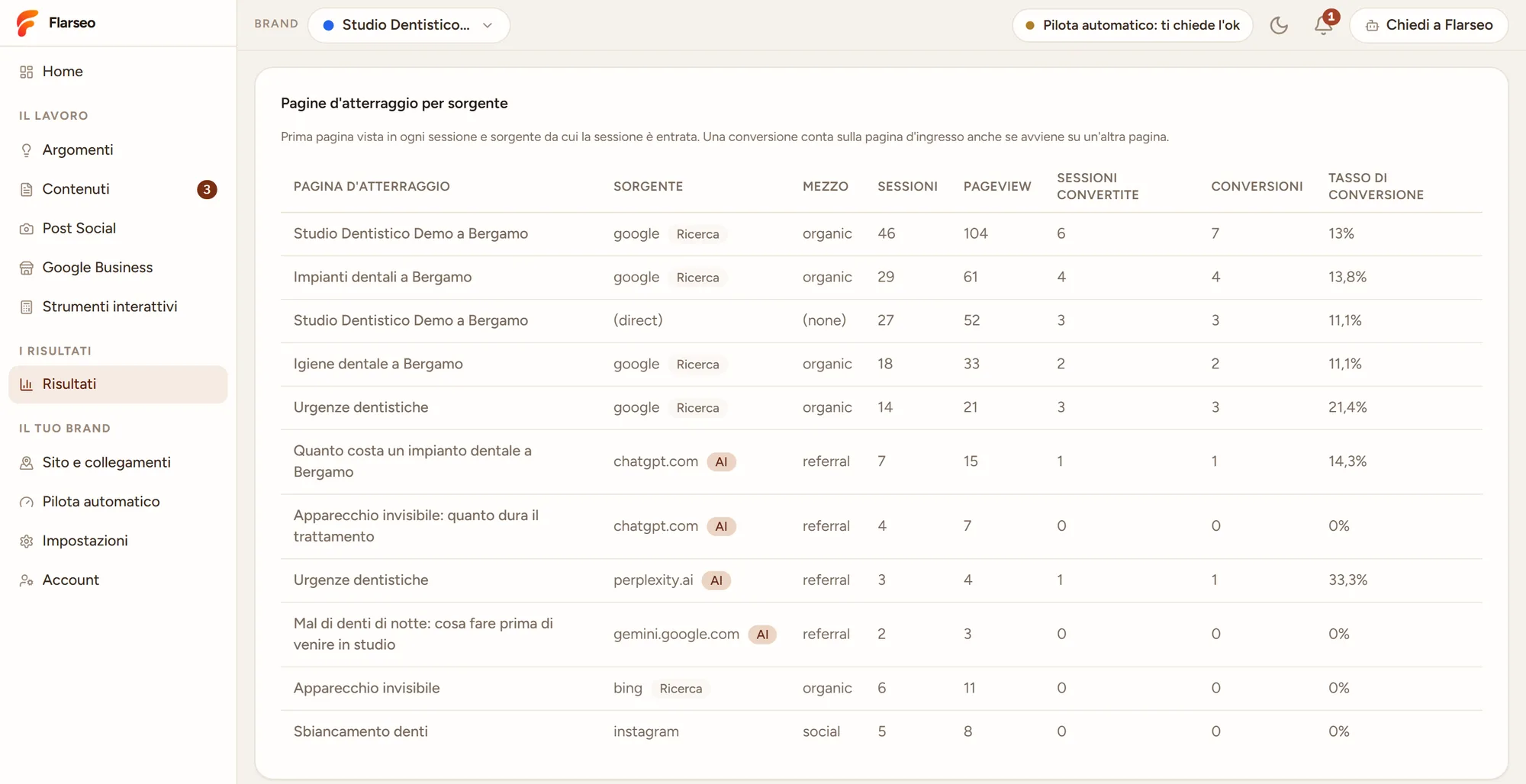
The visits that reached the website from ChatGPT, Perplexity and Gemini, page by page, next to those from search engines. Example data, interface shown in Italian.
Why an assistant cites one site and not another
There is no ranking to climb, but there are three conditions you can work on.
They have to find you
An assistant builds its answer from what it has read: public pages, indexed content, sources it consults at the moment of the question. If your business only exists on a social profile, or inside a site that never says what you do, there is no material to read. Public, readable content is the baseline.
They have to understand you
An assistant has to be able to state confidently who you are, what you do and where you operate. If the business name changes shape from one page to the next, if the address appears in three different versions and the services are described in jargon, the model has no clear entity to name. Clarity matters more here than volume of text.
They have to trust you
Between two businesses doing the same thing, the one that looks more solid gets cited: current content, claims backed by sources, consistency between what the site declares and what is found elsewhere. It is the same work traditional search rewards, applied to a different kind of reader.
Nobody controls an assistant's answers and nobody can guarantee you a mention. You can work on the conditions that make it more likely, and you can measure the visits that come from it.
What Flarseo does
Visits from assistants
Flarseo recognises the visits that reach your website from an AI assistant and keeps them separate from those from search engines.
- ChatGPT, Perplexity, Gemini and other assistants as a source
- The page each visit lands on
- The enquiries that come from those visits
Content machines can read
Generated pages and articles come out with structured data and a consistent heading hierarchy, so a machine understands what it is reading.
- Structured data on pages and articles
- One question per section, with the answer right below it
- Location and services written the same way across the site
Entity clarity
The least glamorous and most useful work: making it unambiguous who you are, what you offer and which area you serve.
- Name, address and services consistent everywhere
- Pages that explain the business without jargon
- Links between articles and service pages
Frequently asked questions about AI visibility
See how many visits AI assistants bring you
Connect your website: the first reading tells you where you start from.